Fusaka: Decoding the 100,000 TPS Hype
Decoding the Fusaka Hype
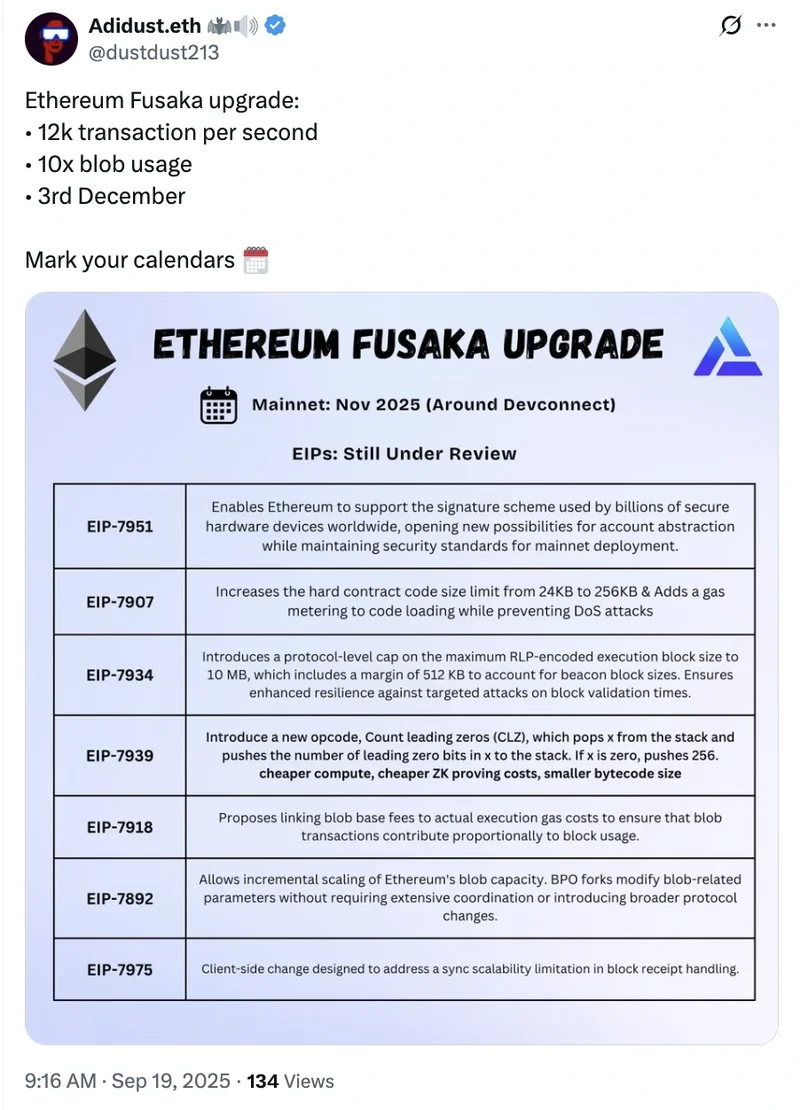
Ethereum's Fusaka upgrade is slated for December 3, 2025, and the marketing machine is in full swing. The promise? A network capable of handling 100,000+ transactions per second (TPS) through Layer 2 rollups, all while maintaining decentralization. It's a bold claim, especially given Ethereum's historical struggles with scalability. But let's dissect the data and see if the numbers support the narrative.
The centerpiece of Fusaka is Peer Data Availability Sampling (PeerDAS). The idea is elegant: instead of every validator downloading entire "blobs" of Layer 2 data, they sample random portions. This, in theory, reduces bandwidth requirements by up to 85%. Think of it as auditing a company's financials by checking a representative sample of transactions rather than poring over every single entry.
The Ethereum Foundation is touting a potential 40-60% reduction in Layer 2 transaction costs post-Fusaka. This hinges on the increased data availability space created by PeerDAS. More space means lower fees, which translates to cheaper transactions for users. But there's a catch: this assumes that Layer 2 networks fully utilize the increased capacity and that demand doesn't outstrip supply. (Always a big "if" in the crypto world.)
The block gas limit is also getting a boost, from approximately 36 million to 60 million gas units. This 67% increase allows for more complex smart contracts and more transactions on Ethereum's main network. However, bigger blocks also mean validators need to process more data. To mitigate this, Fusaka introduces safety measures like a block size cap and a transaction gas cap. It's a delicate balancing act between increasing throughput and maintaining network stability.
Decentralization Under Pressure: Fusaka's Promise vs. Reality
The Decentralization Question
One of the biggest concerns with scaling solutions is the potential impact on decentralization. If increasing throughput requires more powerful hardware, it could push out smaller validators and concentrate power in the hands of a few large players. The Ethereum Foundation insists that Fusaka is designed to avoid this. PeerDAS, they argue, reduces bandwidth requirements, allowing home stakers to continue participating without needing enterprise-grade internet connections.
But how realistic is this claim? While PeerDAS reduces bandwidth requirements, it doesn't eliminate them entirely. Validators still need to download and process a portion of the blob data. If the network experiences a surge in activity, even the reduced bandwidth requirements could become a bottleneck for home stakers. We need to see real-world data on how Fusaka impacts validator participation before we can definitively say that it preserves decentralization.
Ethereum’s Fusaka upgrade: Scaling rollups without breaking the core
There's also the issue of "Blob Parameter Only" (BPO) forks. These mini-forks allow Ethereum to increase the number of blobs per block without a full hard fork. The first BPO update is scheduled for December 9, 2025, just days after the main Fusaka upgrade. This rapid succession of upgrades raises questions about the testing and auditing process. Are developers moving too fast, potentially introducing unforeseen risks?
I've looked at hundreds of these upgrade proposals, and the speed at which these BPO forks are being rolled out strikes me as potentially problematic. It's like trying to upgrade a jet engine mid-flight. Sure, it might improve performance, but it also increases the risk of a catastrophic failure.
The Ethereum Foundation is also touting the introduction of a blob fee reserve mechanism (EIP-7918). This mechanism aims to stabilize data costs by storing excess blob fees in a reserve. When demand spikes and blob fees rise rapidly, the reserve releases fees back into circulation to smooth out price volatility. The goal is to provide more predictable costs for Layer 2 networks and a better user experience.
But this raises another question: who controls the blob fee reserve? If the reserve is controlled by a centralized entity, it could be used to manipulate fees and distort the market. The details of the reserve's governance are crucial.
Fusaka: Milestone, Not Miracle (Yet)
The Long Game
Fusaka is undoubtedly a significant upgrade, but it's not a silver bullet. It's one step in a long journey towards a truly scalable Ethereum. The Ethereum Foundation has a roadmap that extends well beyond Fusaka, with future upgrades like Glamsterdam, Surge, Verge, Purge, and Splurge. Each of these upgrades aims to address different aspects of scalability, security, and efficiency.
The key takeaway from all this is that Fusaka is not the finish line; it's a milestone. It represents a significant improvement in Ethereum's data capacity and a step towards a more scalable future. But it's crucial to maintain a healthy dose of skepticism and to demand data-driven evidence to support the claims being made.
What Is the Fusaka Upgrade: Ethereum's Next Hard Fork
Cautious Optimism Is Warranted
Ethereum has a history of overpromising and underdelivering. Fusaka has the potential to be a game-changer, but only if it lives up to the hype.